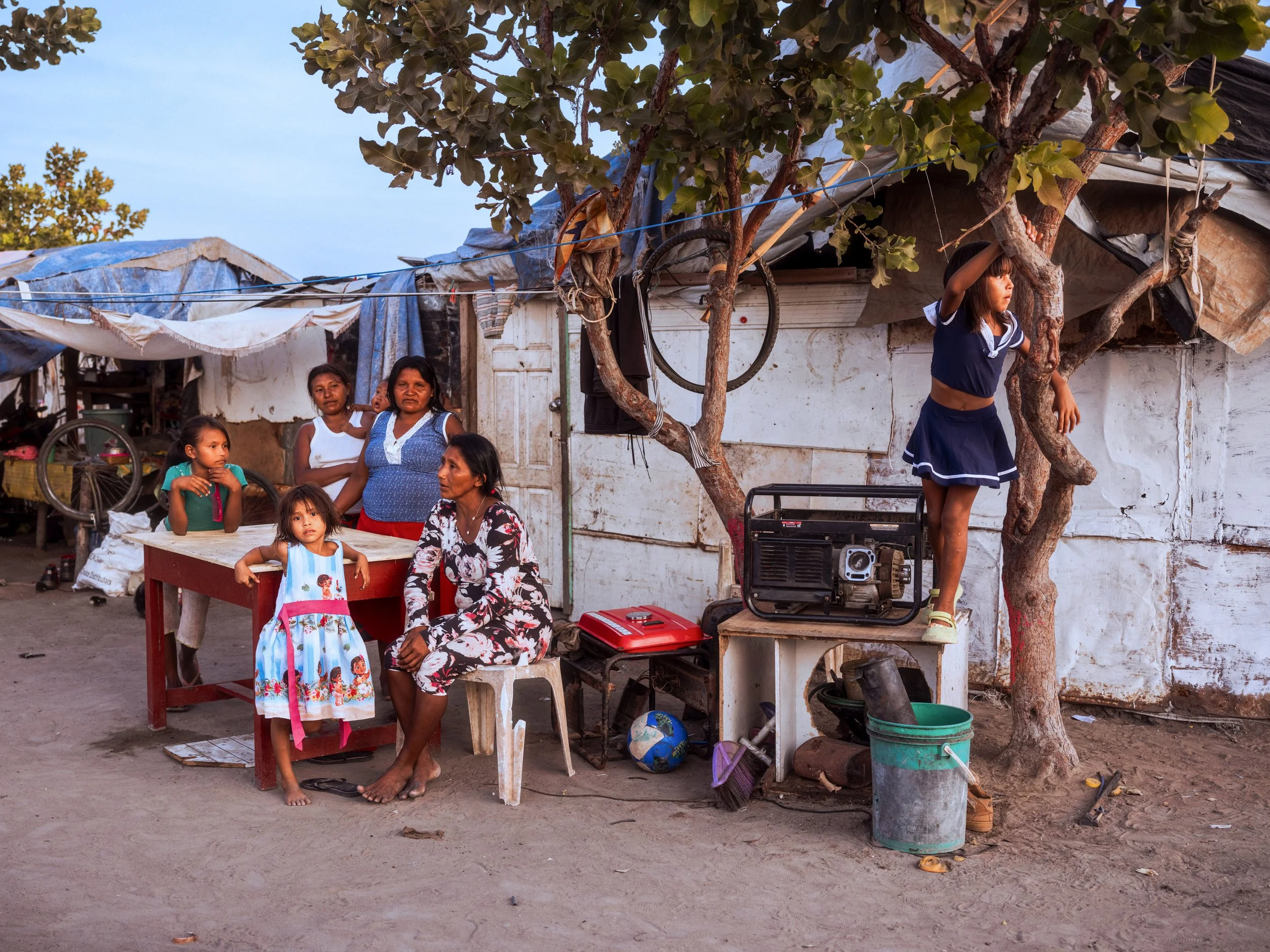
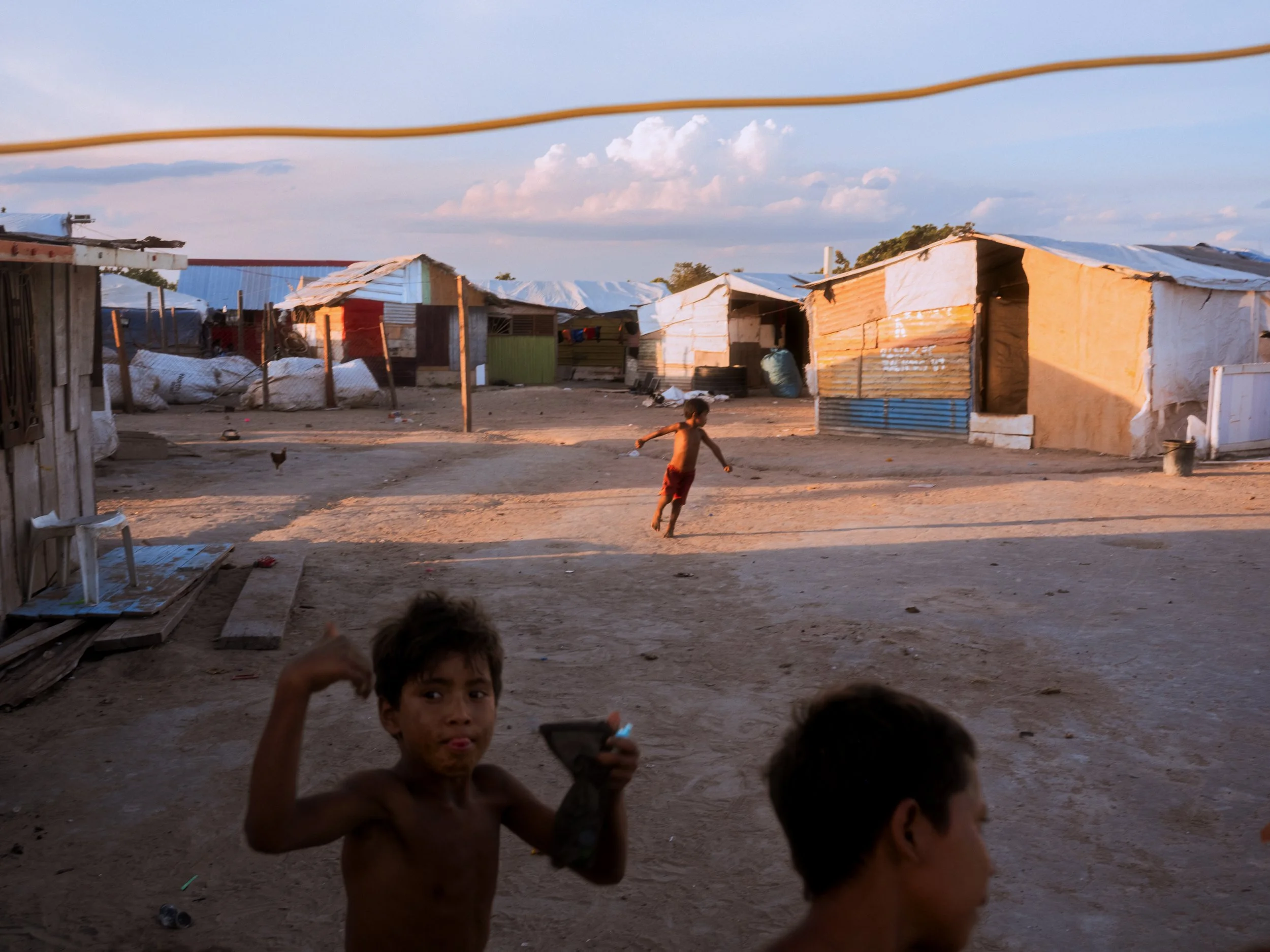
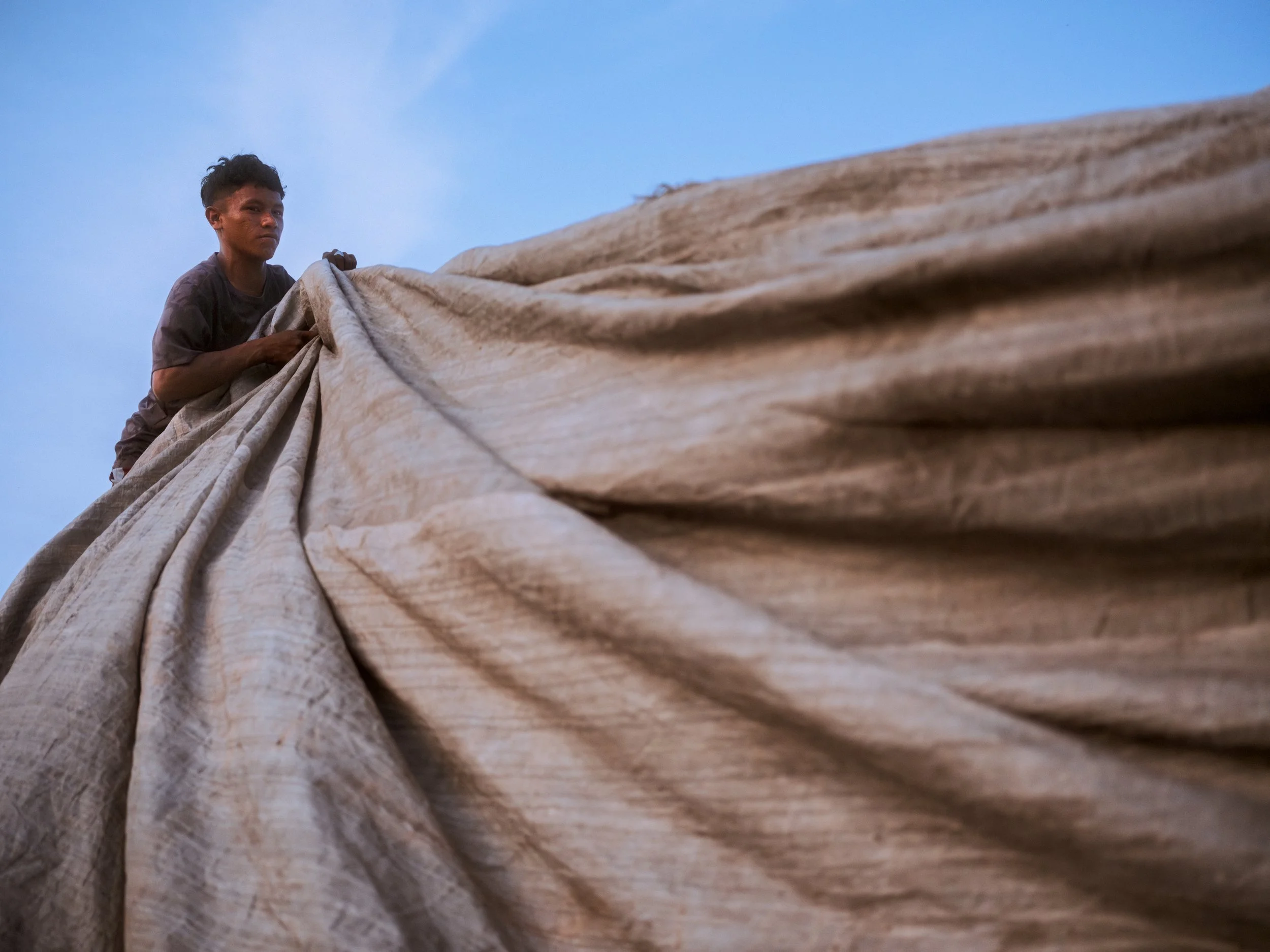
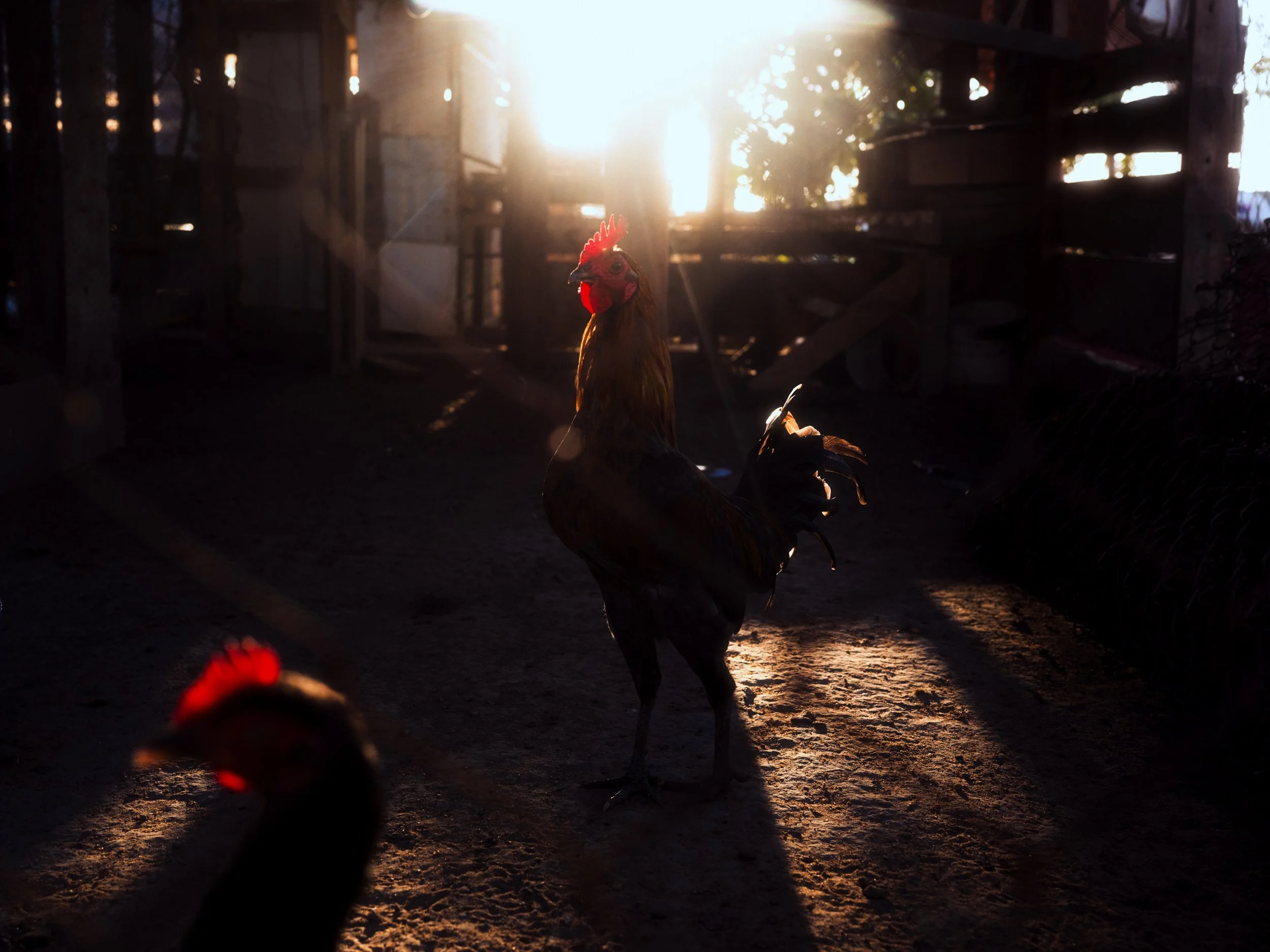
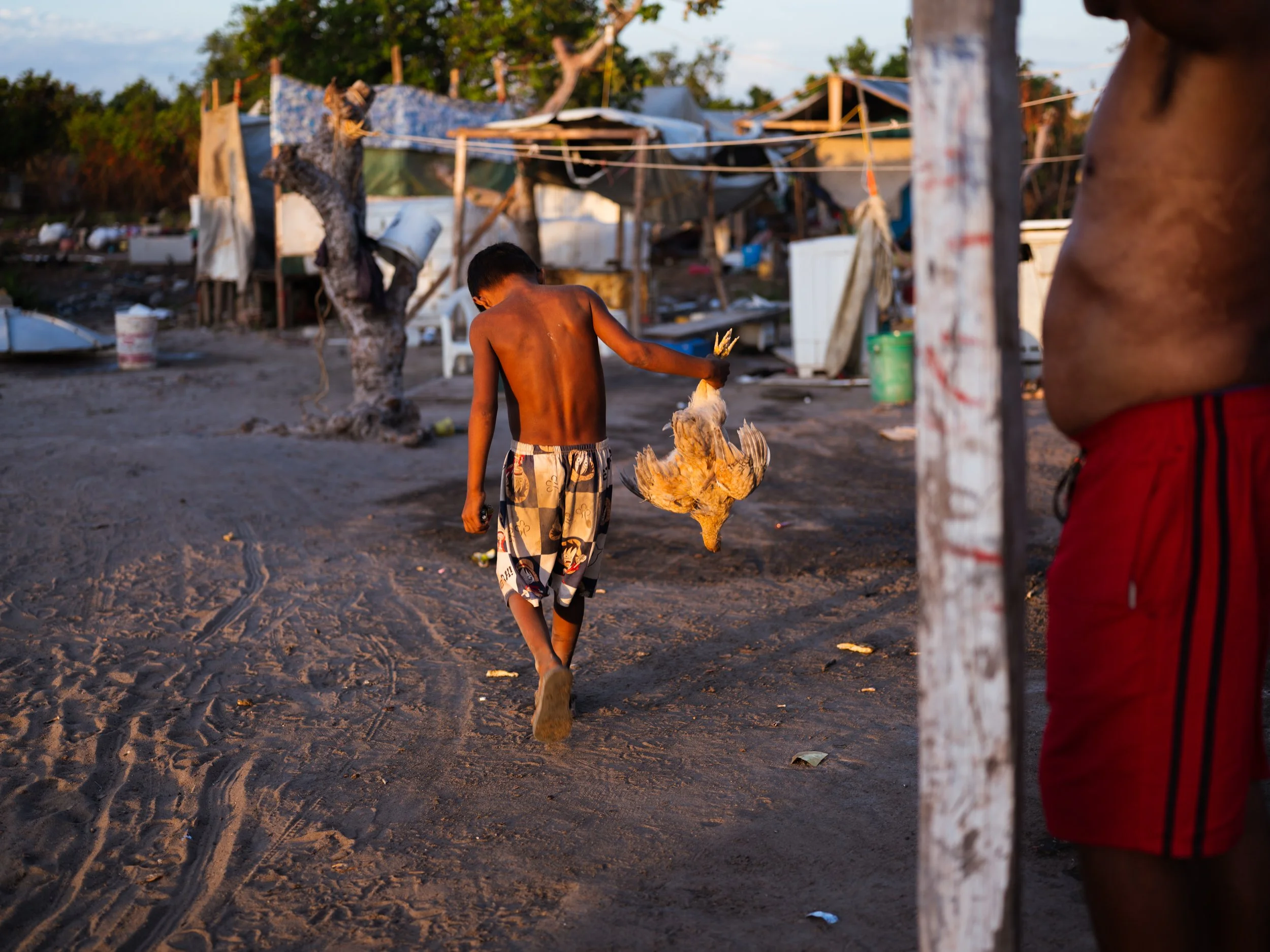
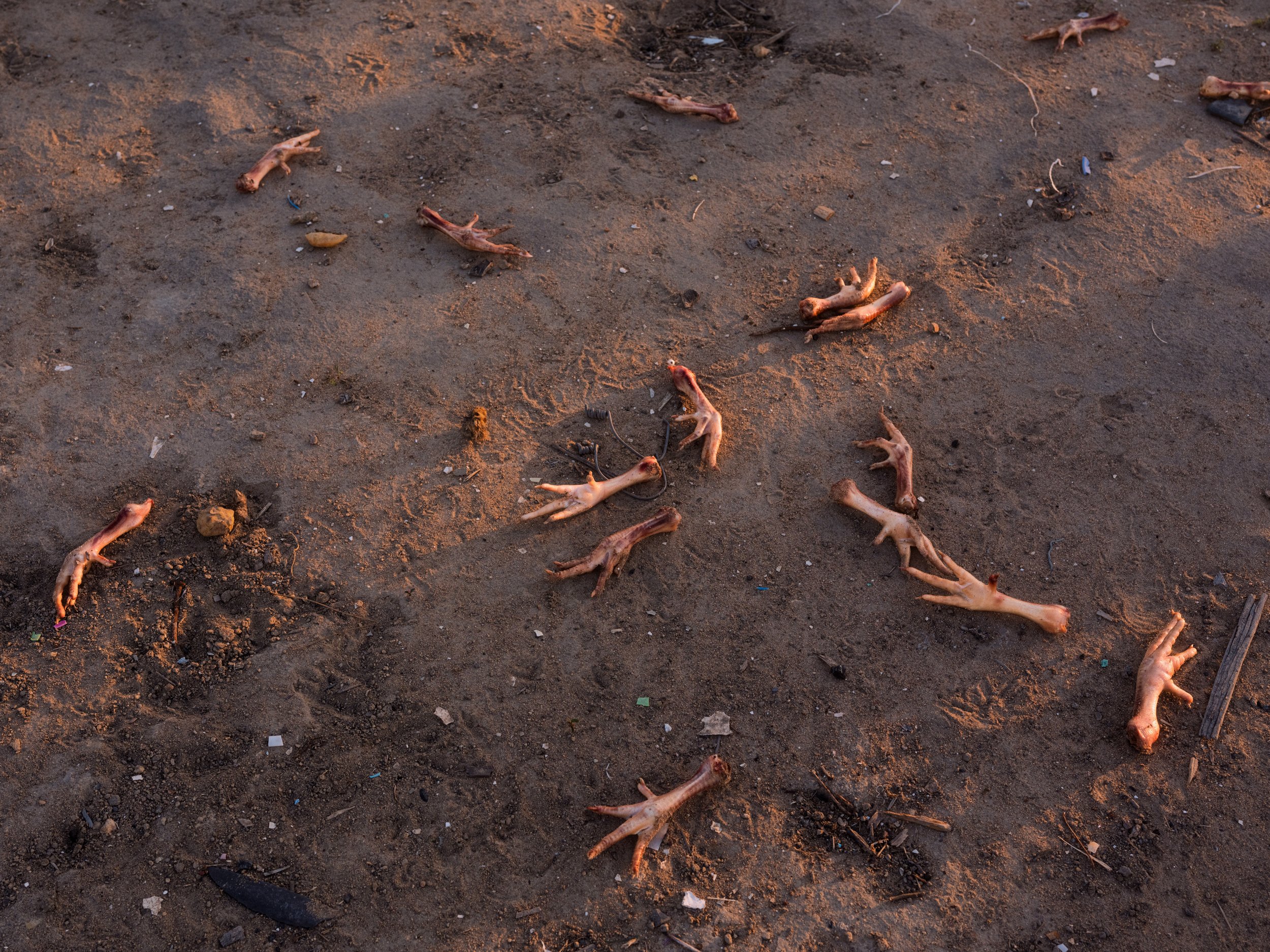
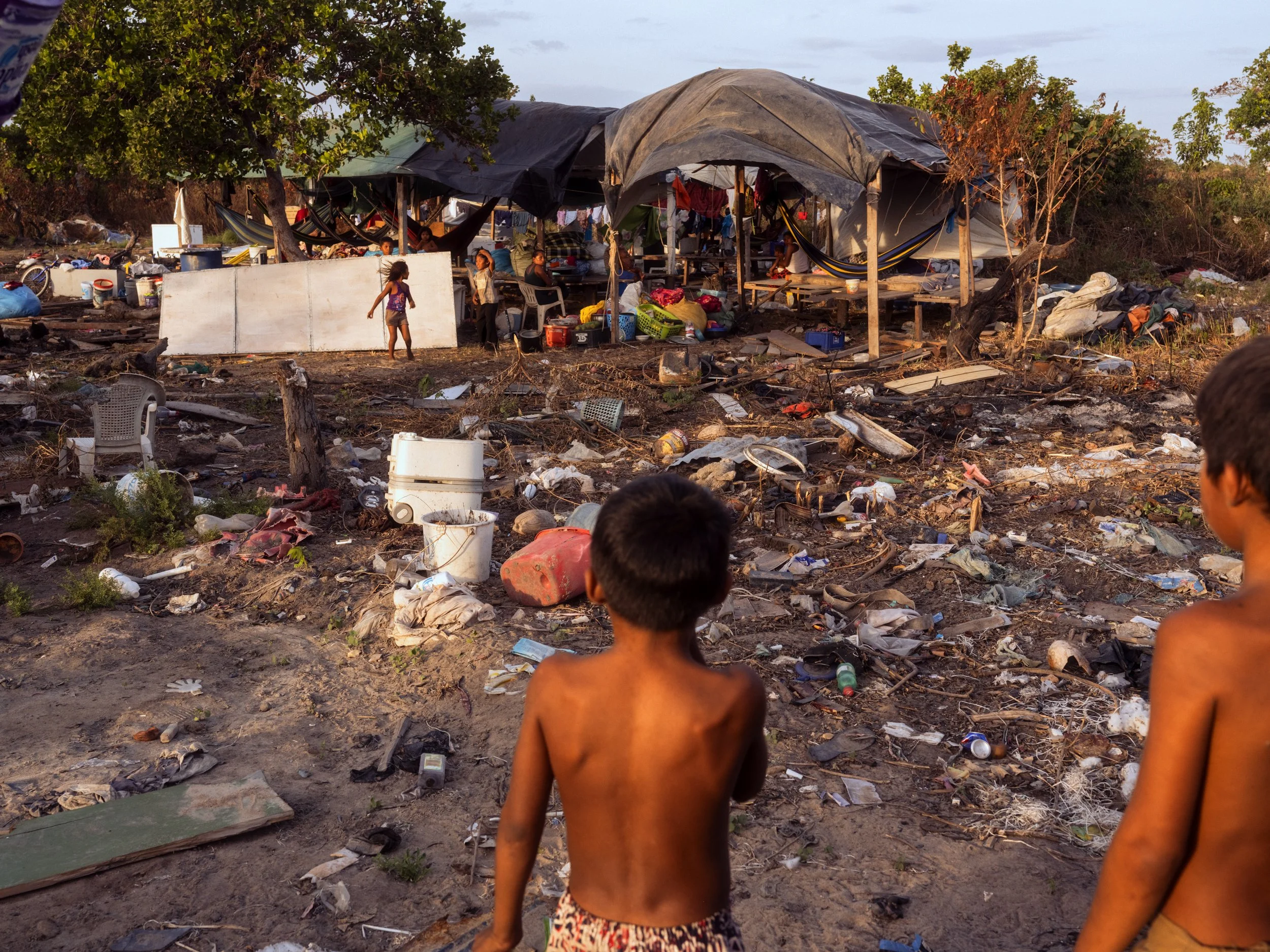
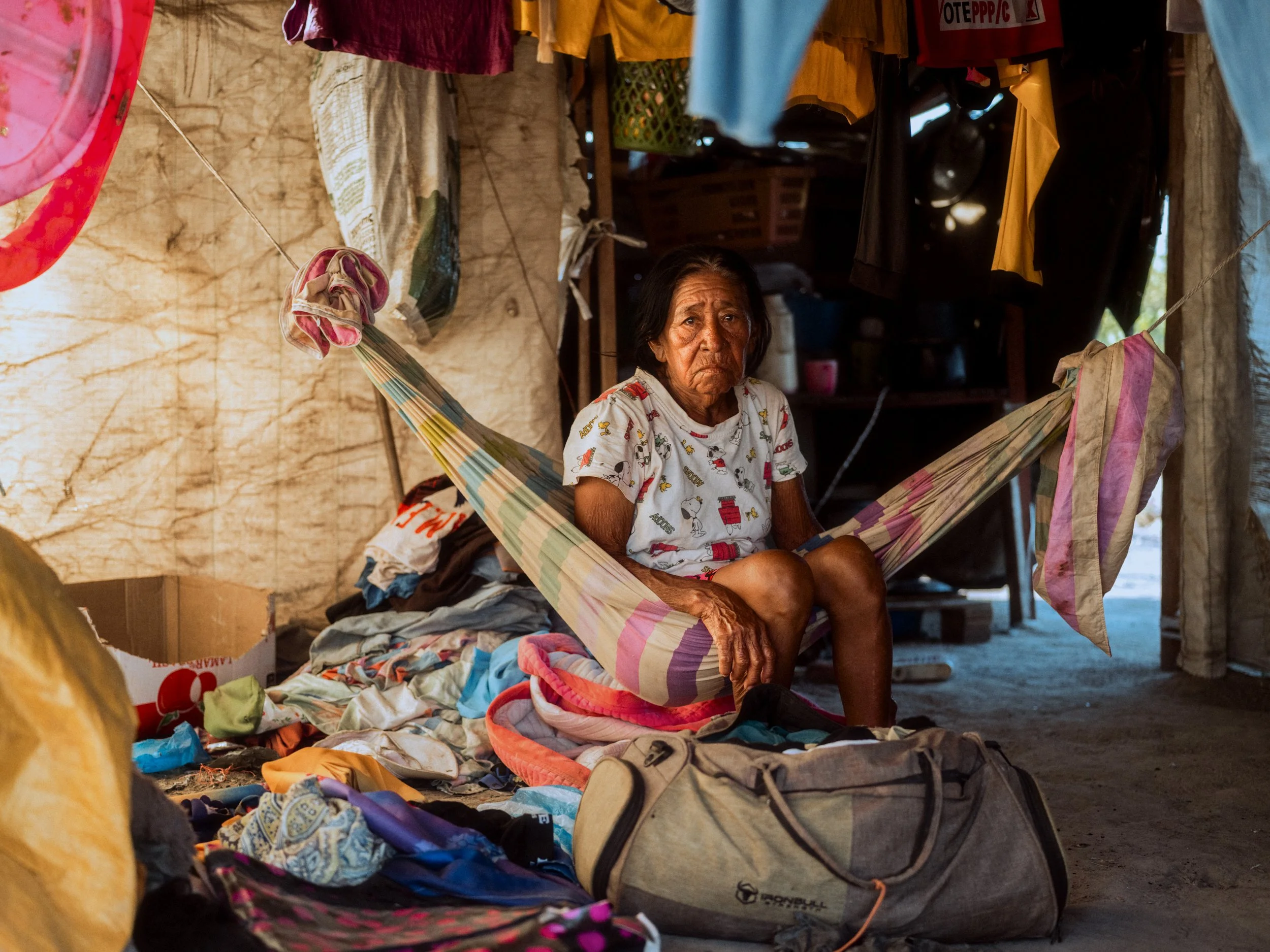
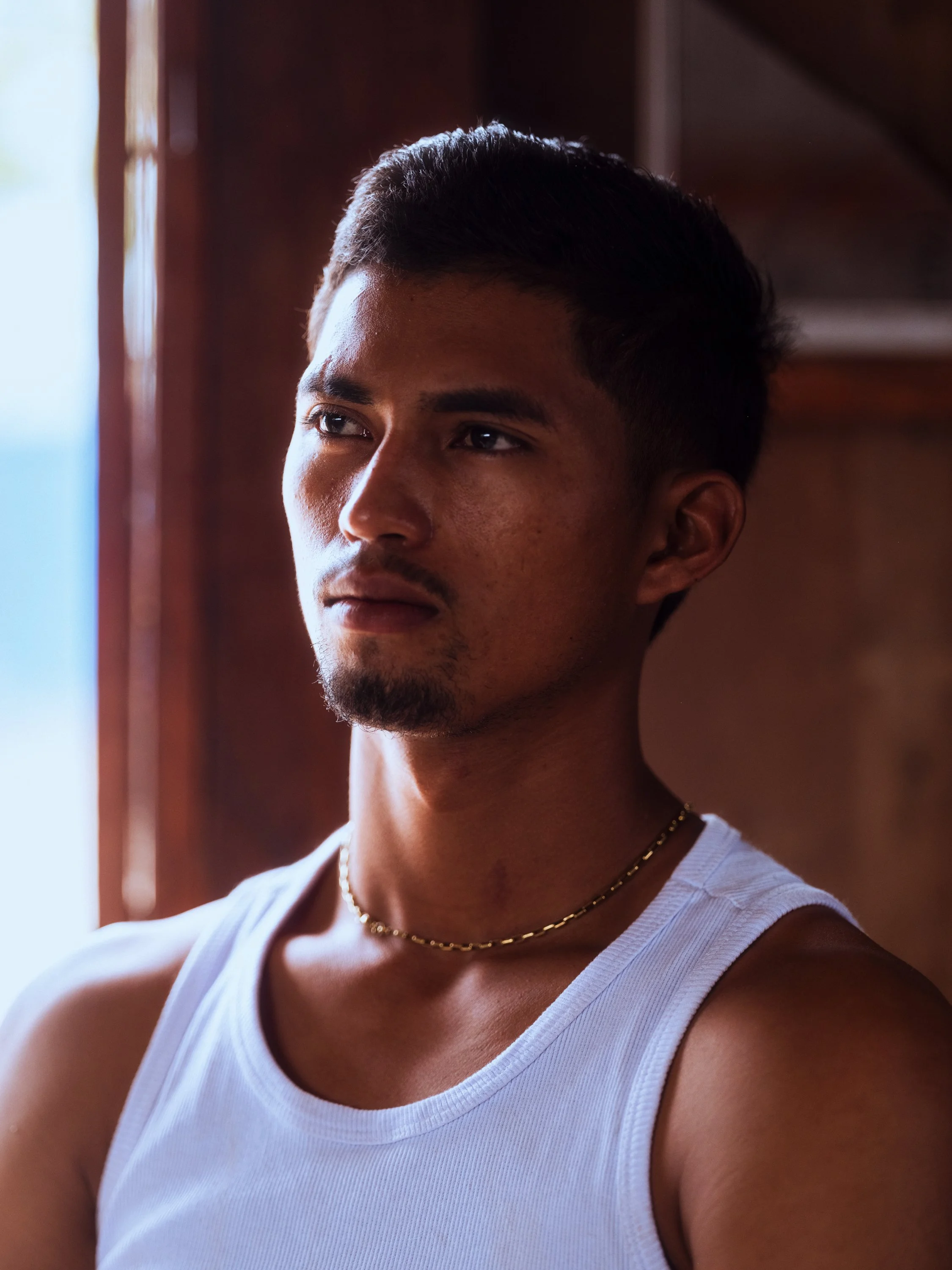
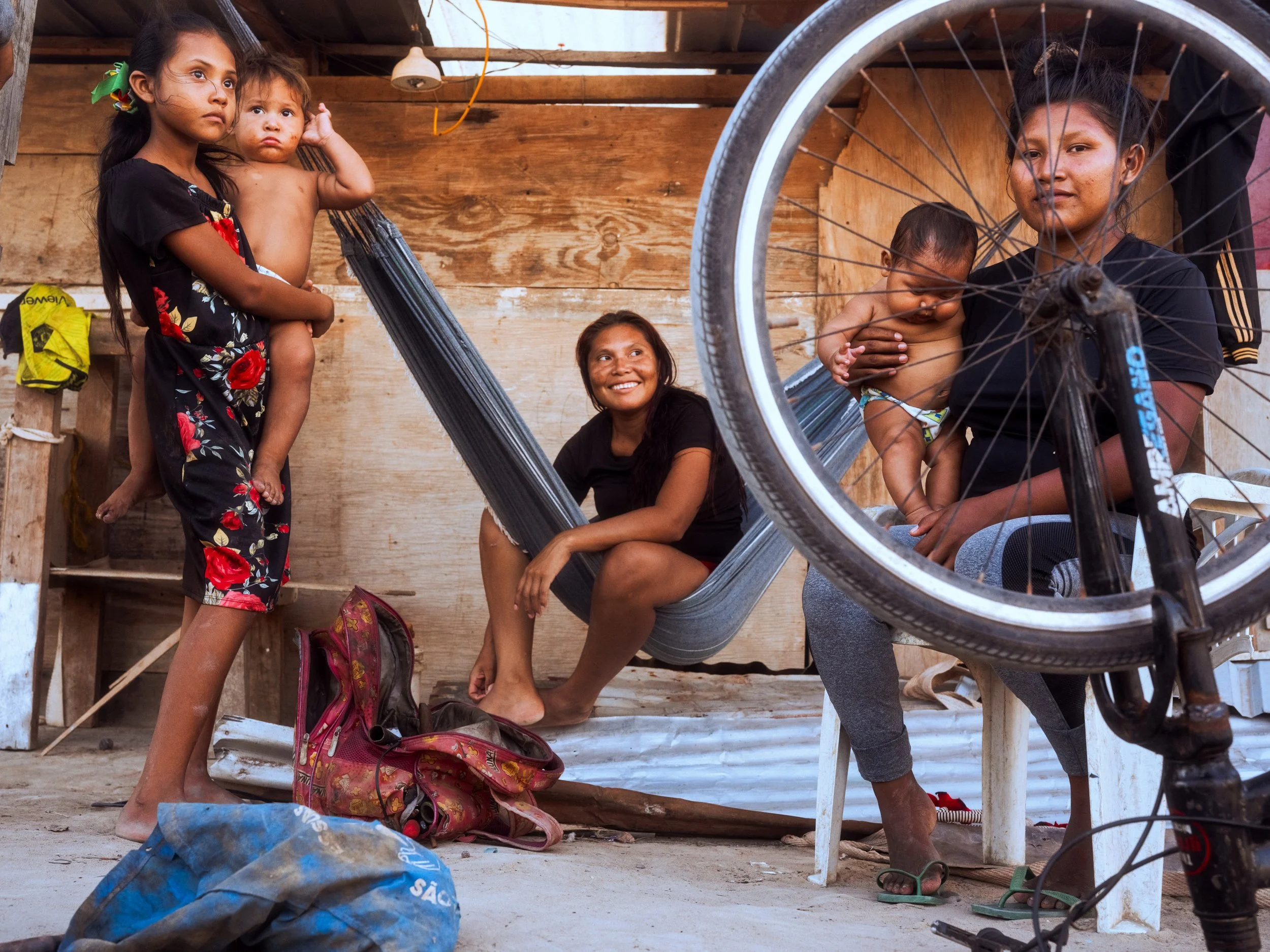
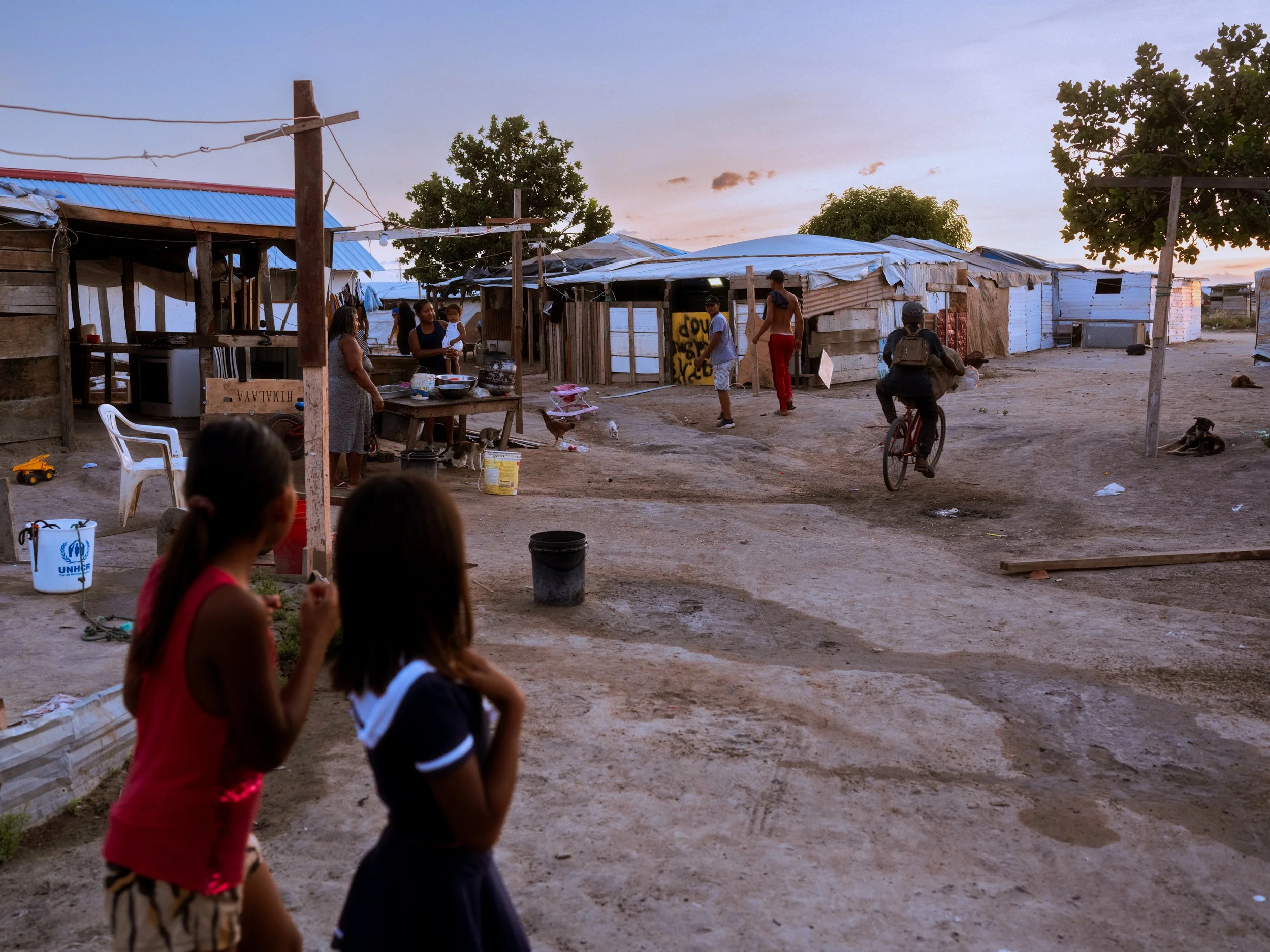
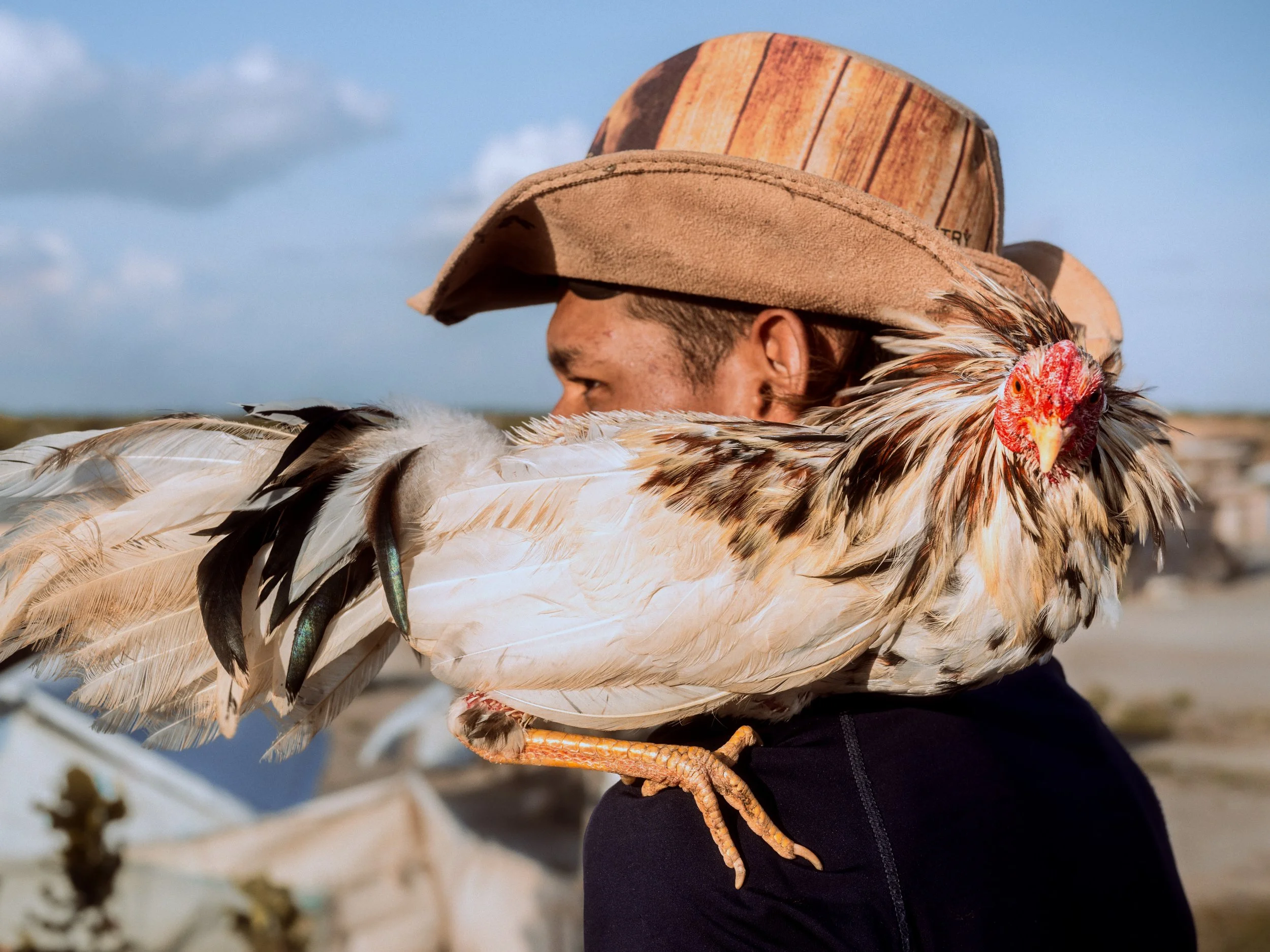
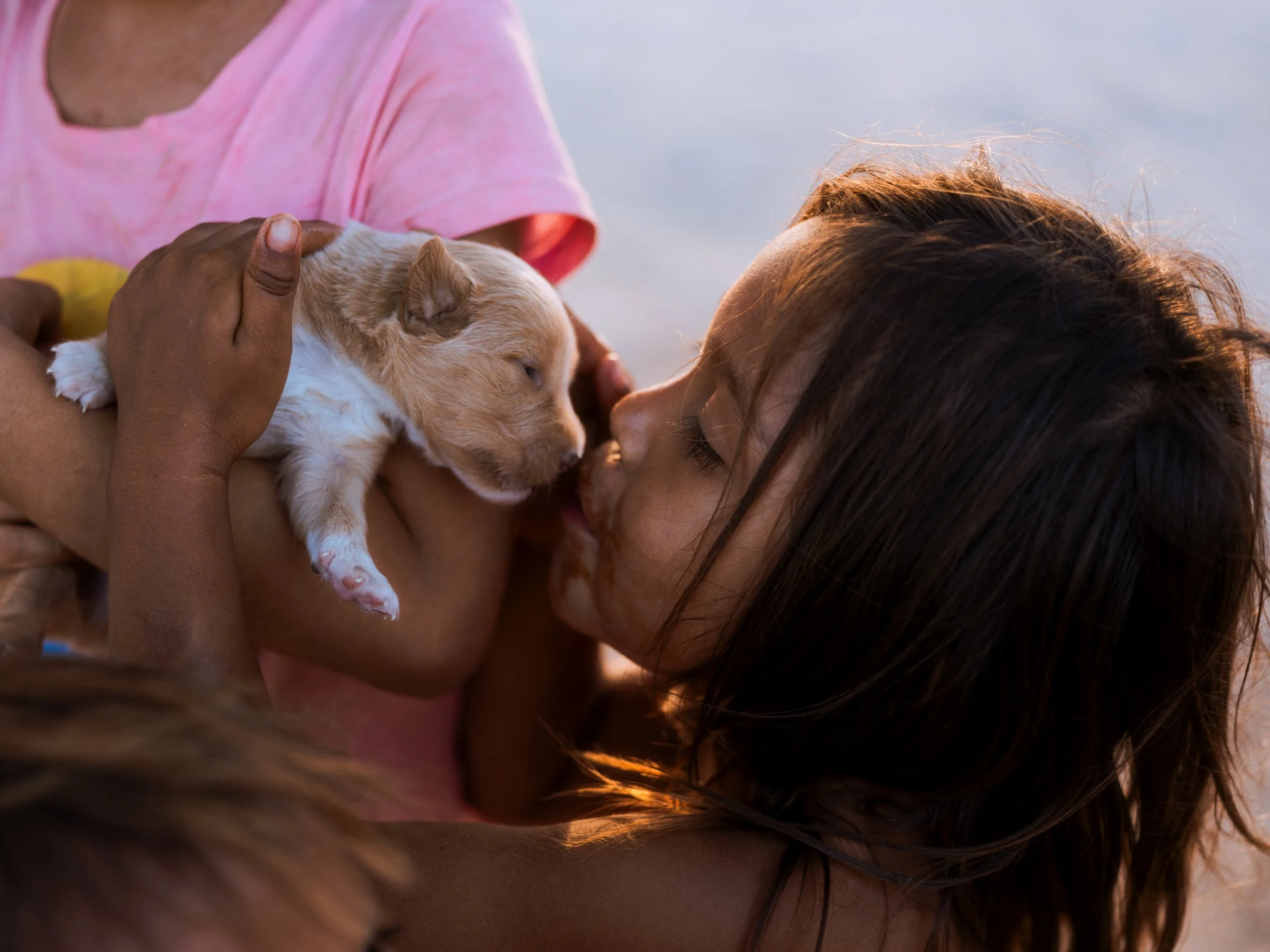
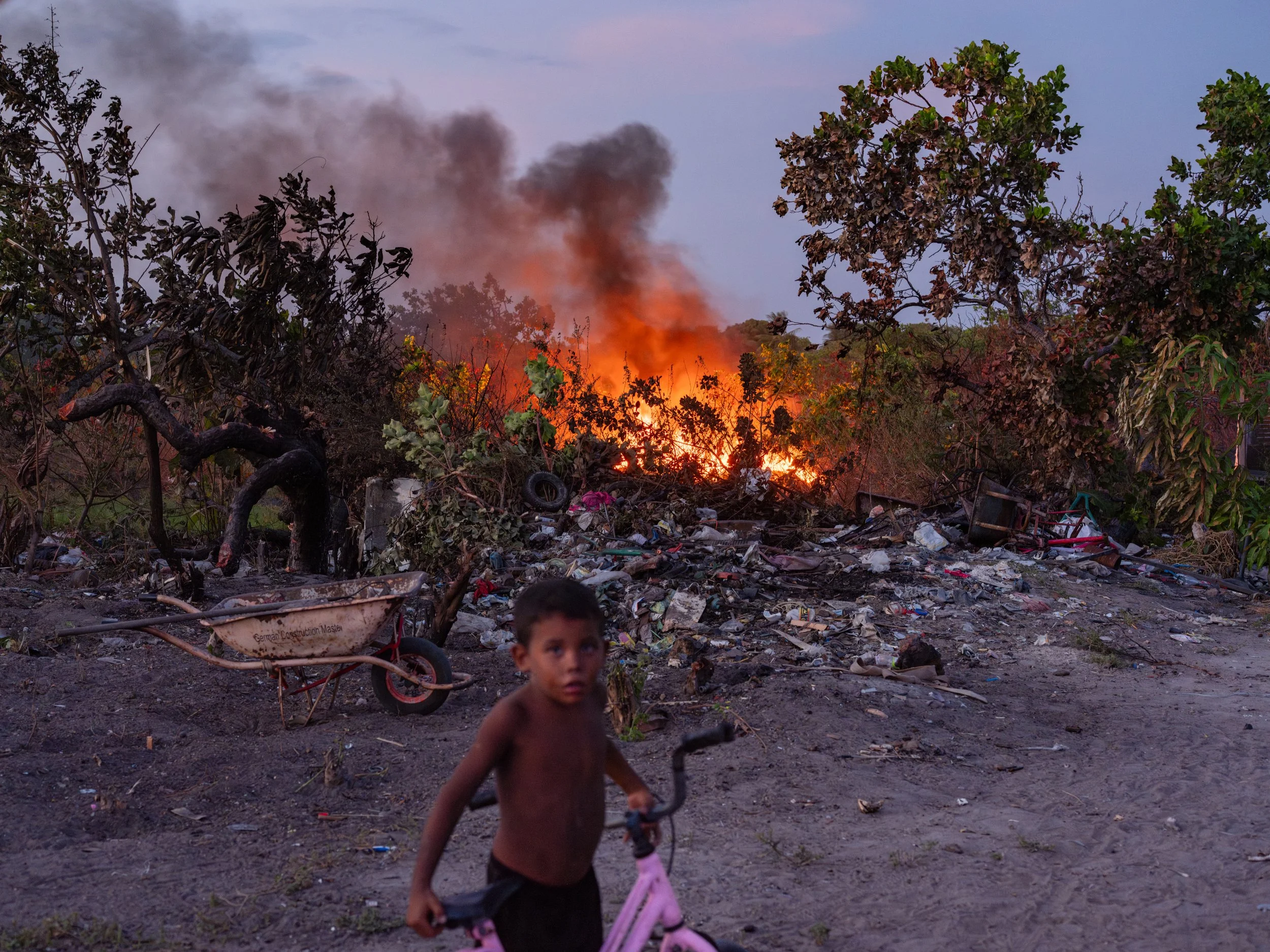
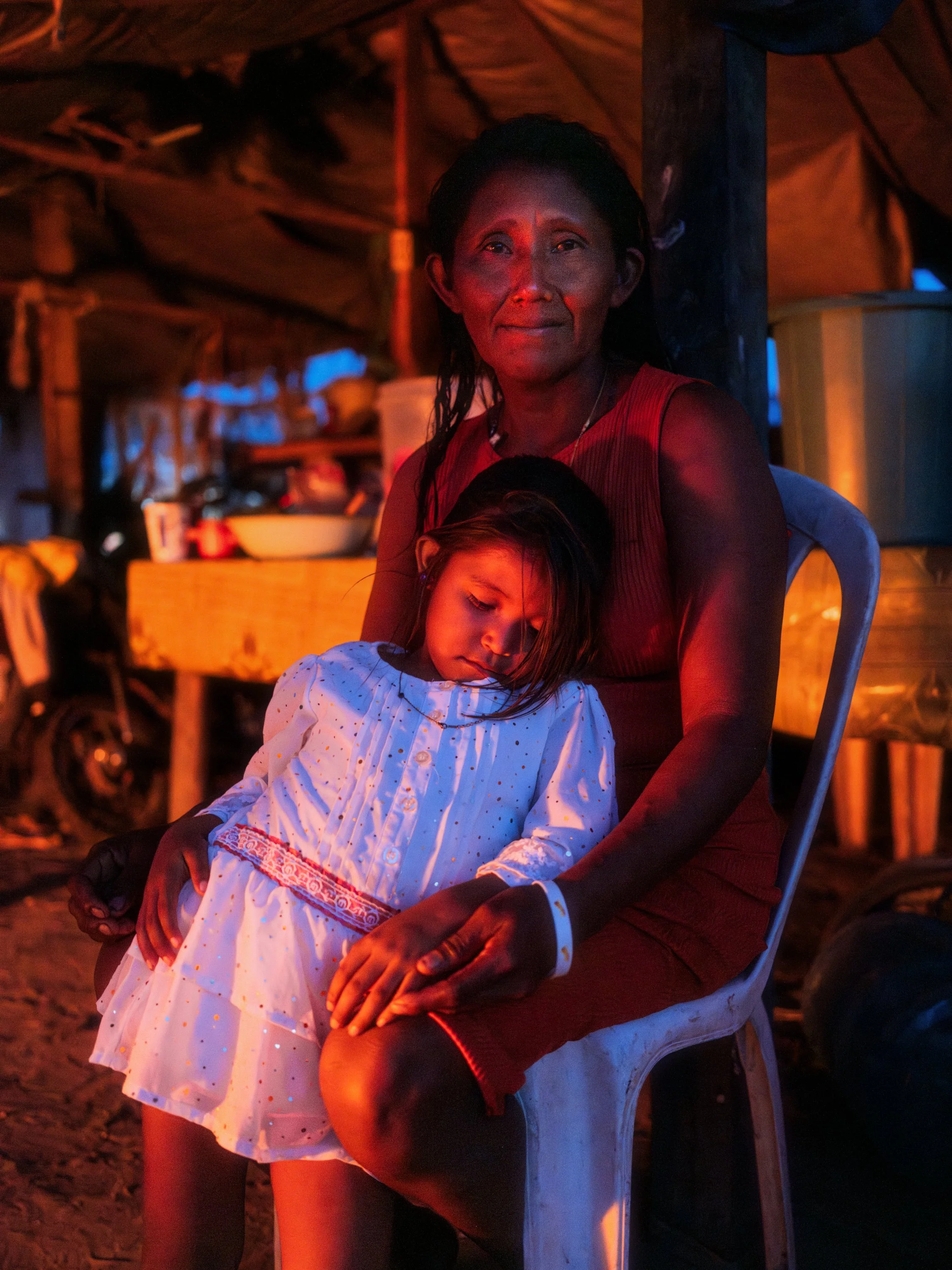
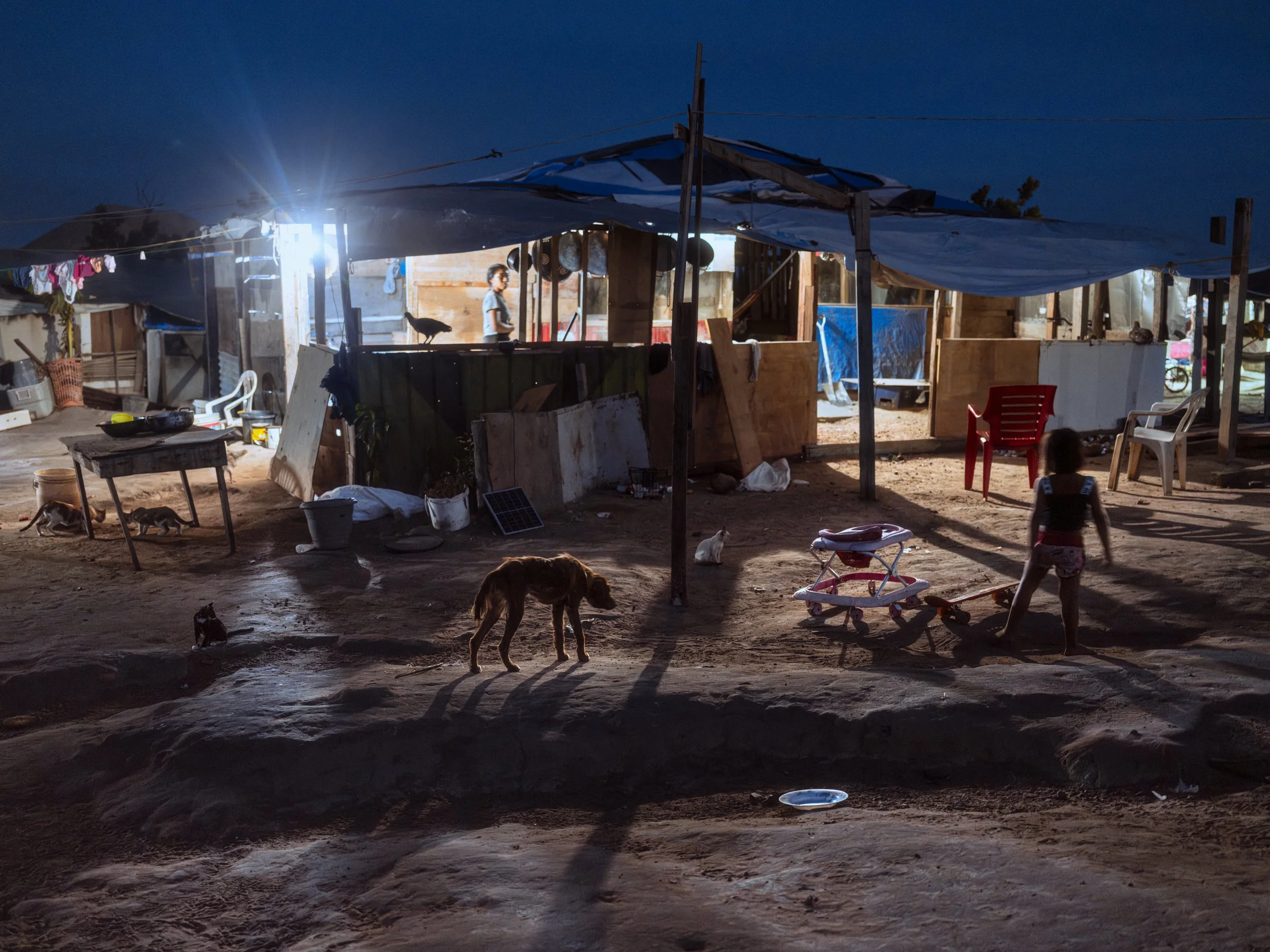
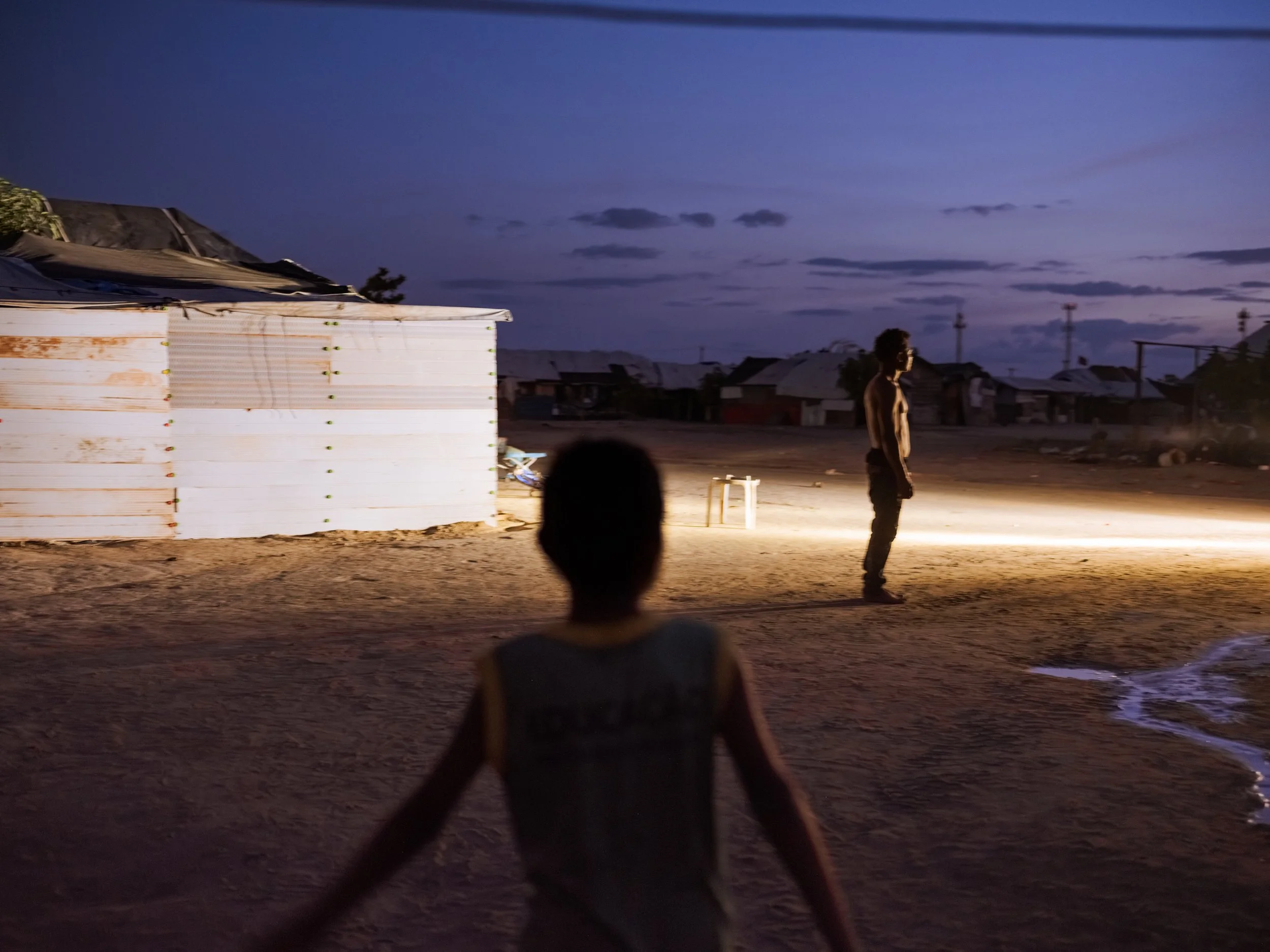
This project documents life in a Venezuelan refugee camp in Guyana called Plastic City. Located on the outskirts of the town of Lethem, on Guyana’s border with Brazil, the settlement began to take shape about 10 years ago when the Guyanese government designated a plot of land near the local landfill for use by Venezuelan refugees. These refugees began building homes out of the materials closest at hand: scraps of plastic and wood from the garbage, pieces of PVC, and sheets of tarpaulin. The settlement was given the nickname Plastic City, which has stuck to this day.
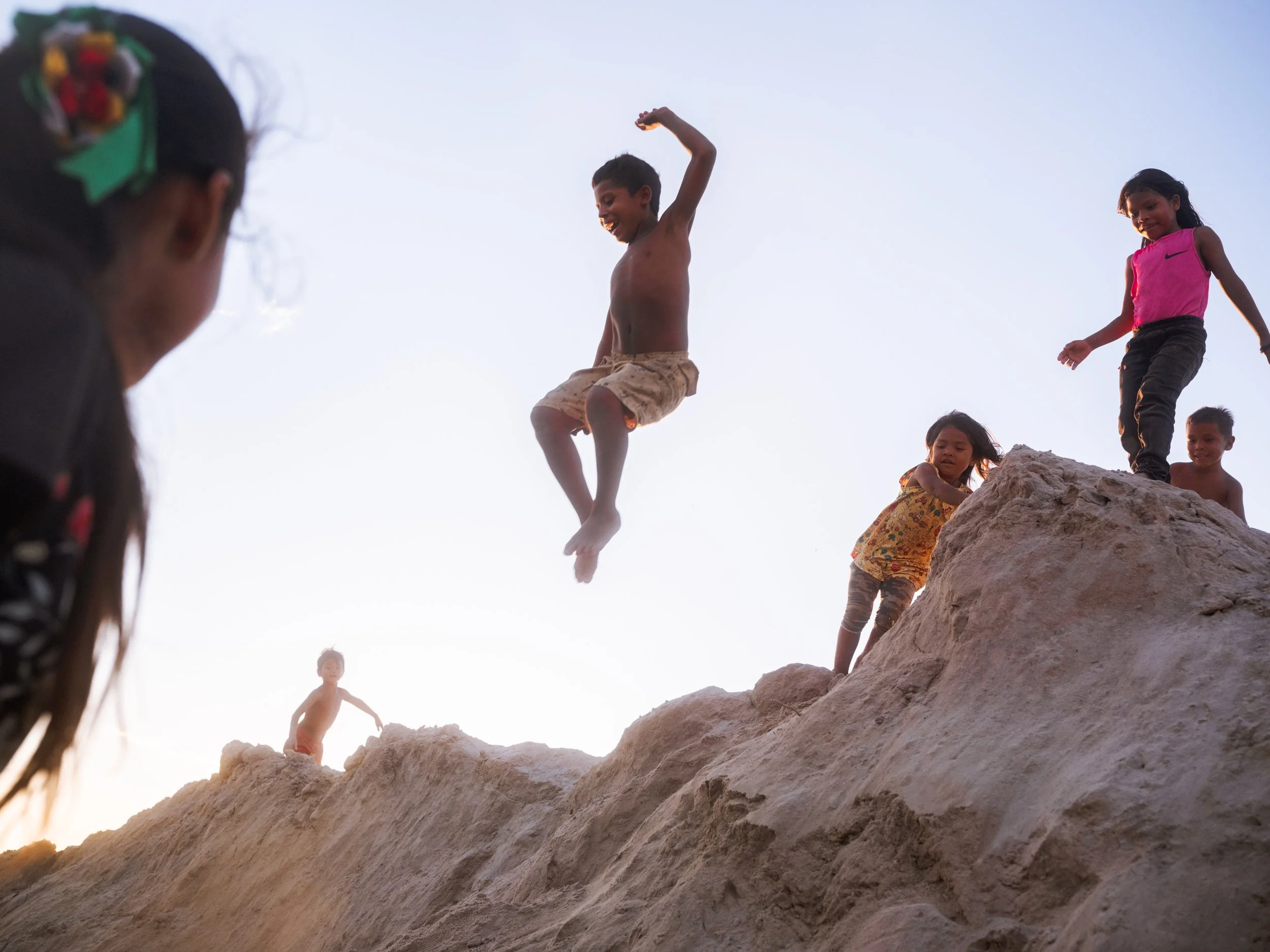
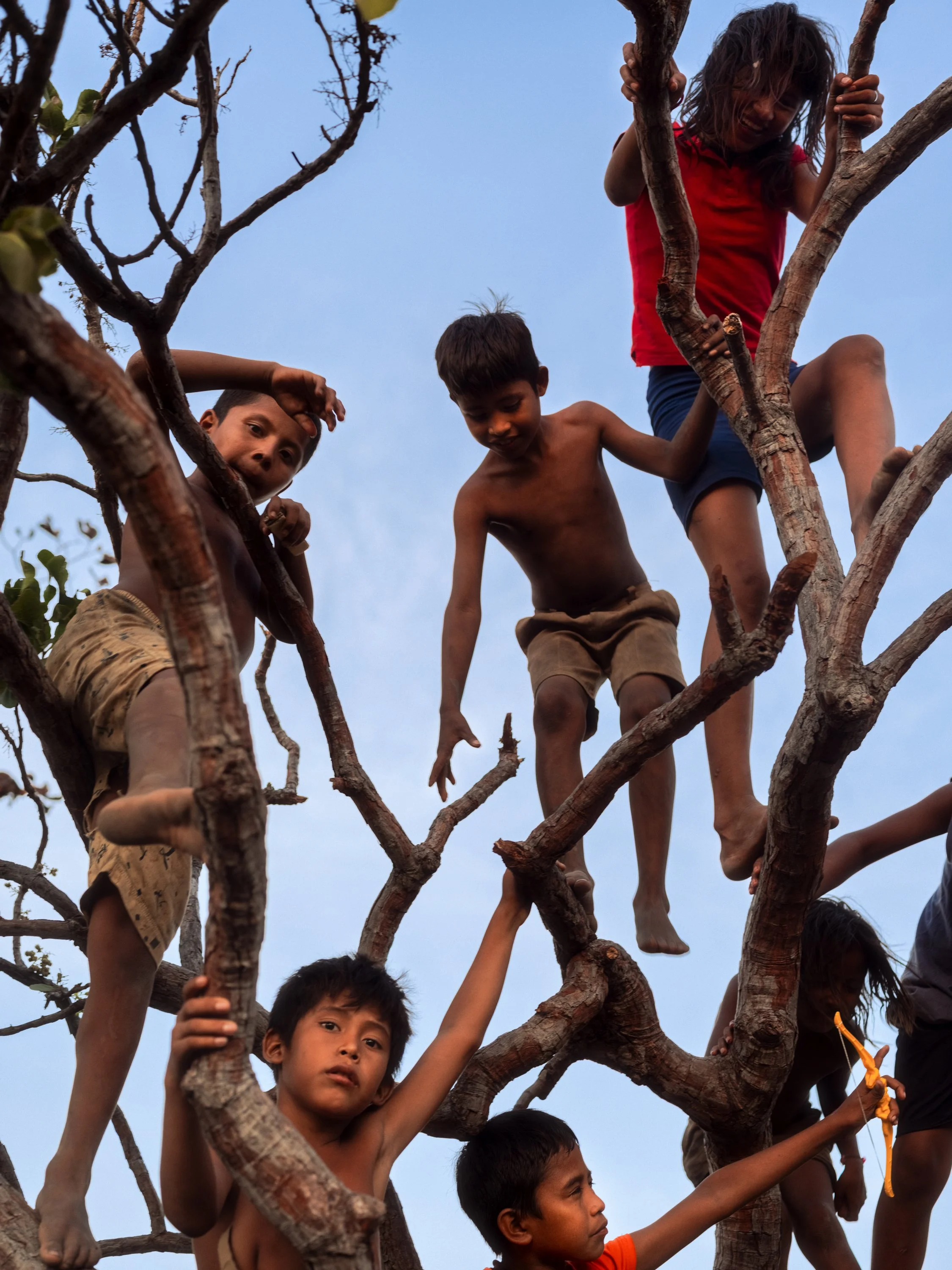
Today, around 500 people live in Plastic City, more than half of them adolescents. The vast majority of them are economic migrants from the Warau and Eñepa indigenous communities. Many of the adults I spoke to walked to Guyana from the Orinoco Basin or the state of Bolivar in Eastern Venezuela. The journey usually takes around a month on foot, and I met people as old as 70 who undertook the brutal journey, which involves walking south to Boa Vista, Brazil, then turning north and entering Guyana through the border near Lethem.
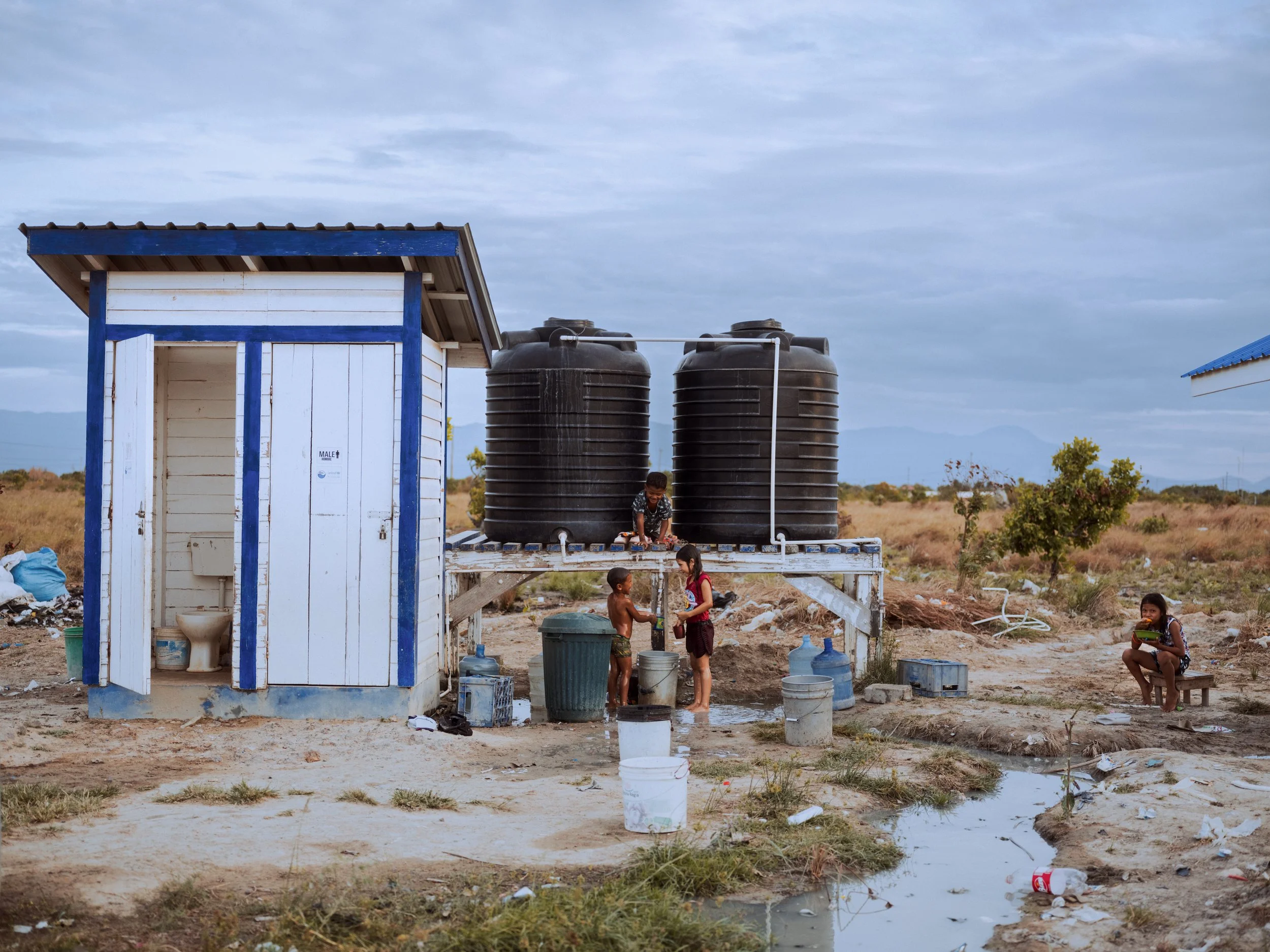
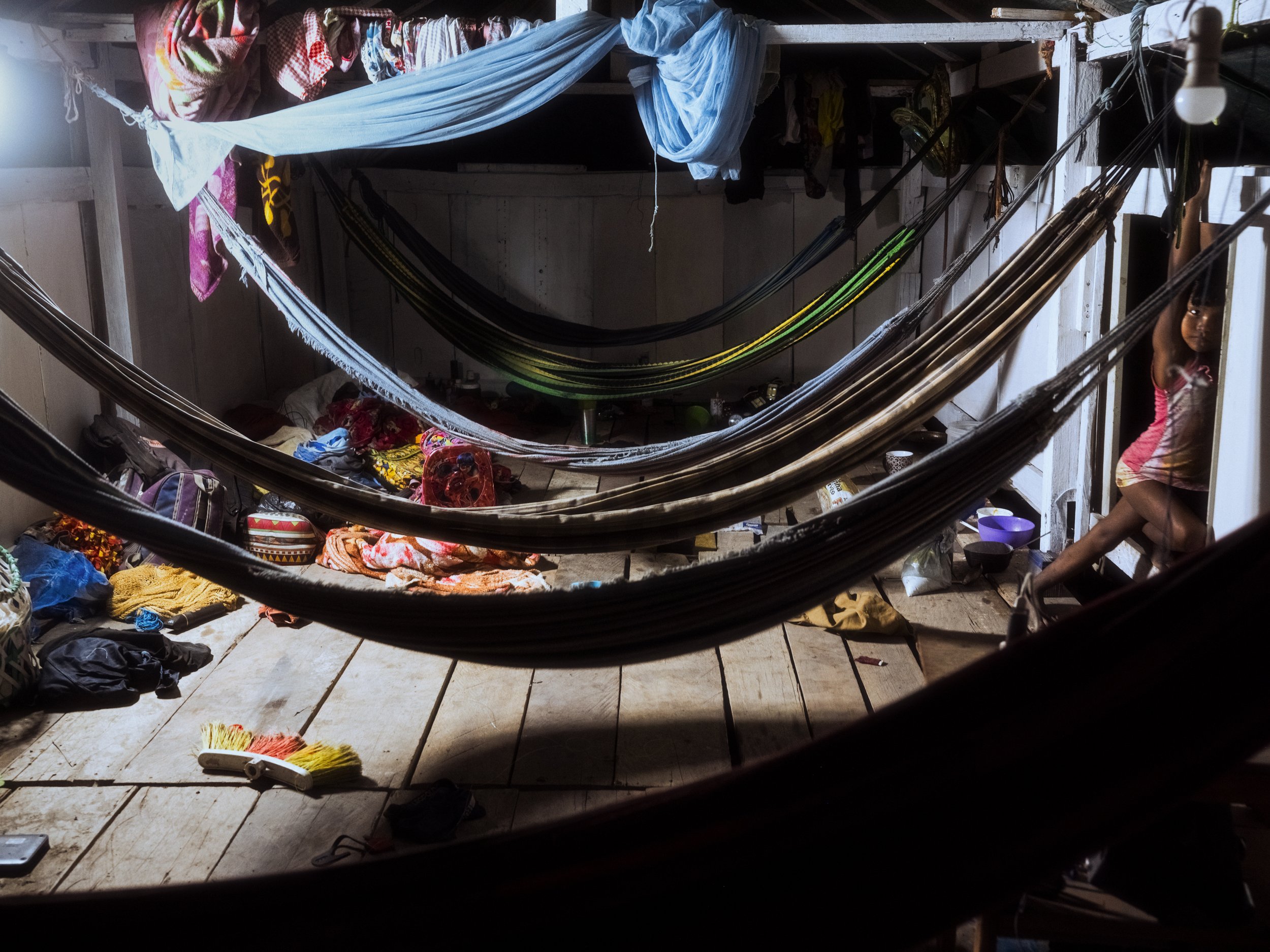
The residents of Plastic City do not have access to running water or the local electrical grid. Some use battery or solar-powered LED lights in their homes, and one or two families own petrol-powered generators. The Guyanese government built a latrine area connected to the local water network, but most residents still get their water from a series of wells they dug throughout the settlement.
The residents of Plastic City, like many refugees, live in a state of limbic anxiety. They are prevented by the Guyanese government from going more than a few kilometres away from Lethem and Plastic City, but are also prohibited from setting down permanent roots in the settlement.
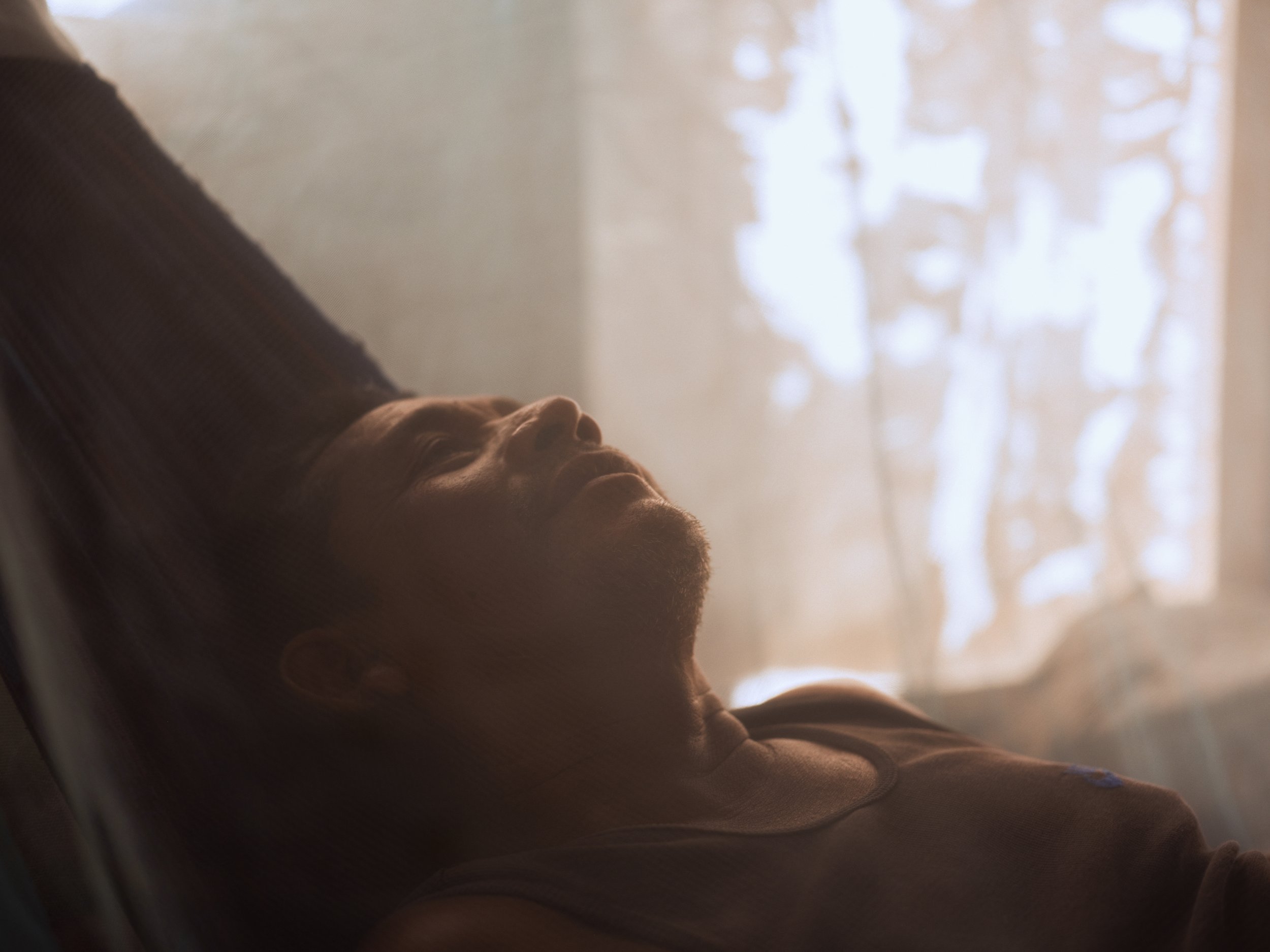
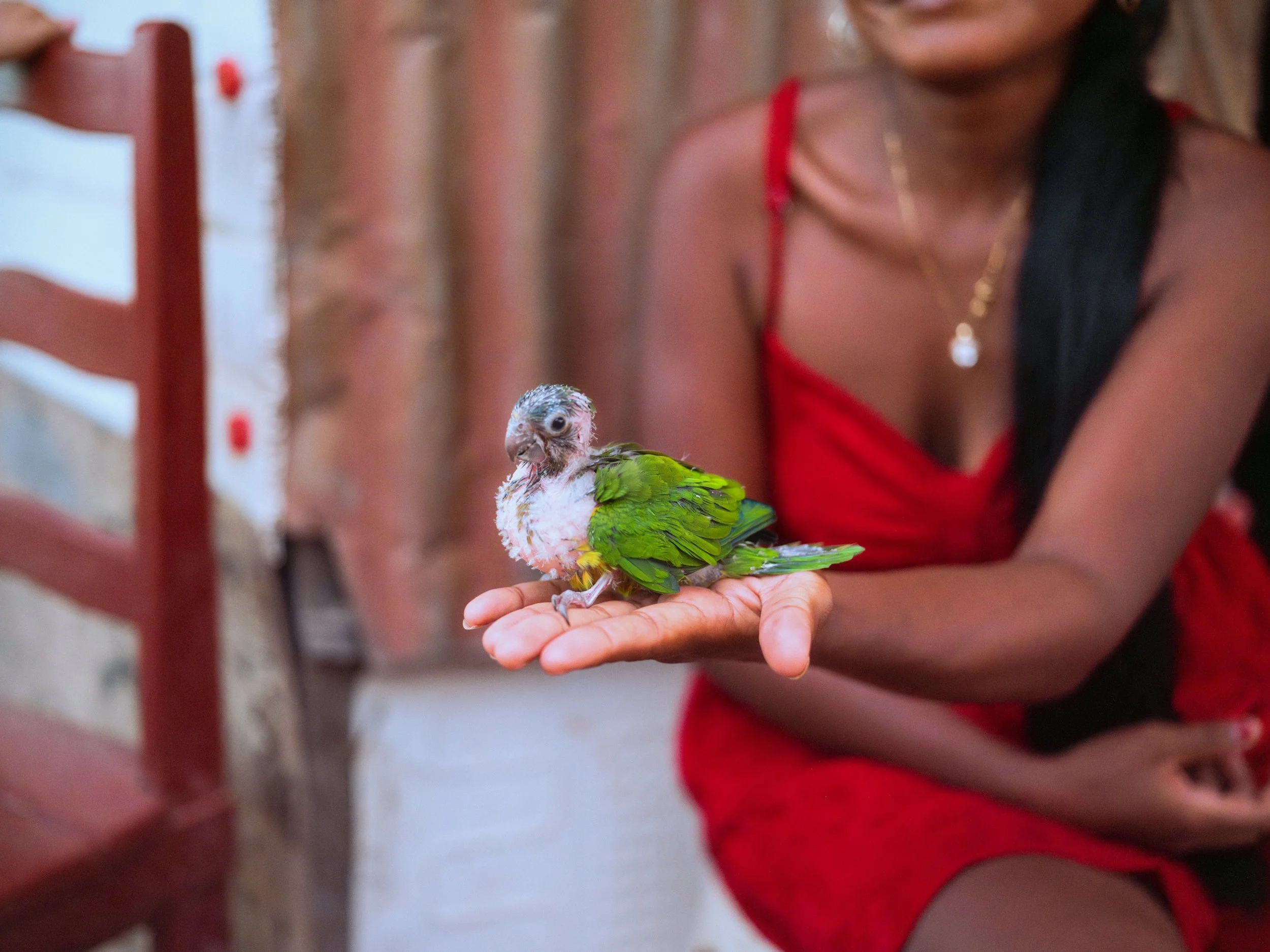
Through sustained engagement with residents, this project tries to foreground the lived realities of indigenous displacement. The work considers how indigeneity is renegotiated in a border zone where territory is no longer ancestral but improvised, and shelter is built from the residue of another society. By centring daily life, the project frames Plastic City not only as a site of precarity, but as a space where indigenous identity, resilience, and memory are reconstituted in displacement.